
Lesson 4: Education for Intercultural Dialogue and Sustainable Development
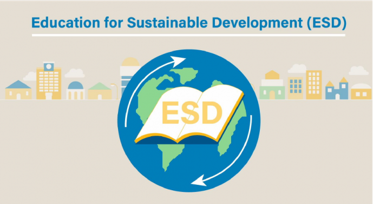
Education & Sustainable Development
Education is an essential tool for the accomplishment of sustainability. The existing financial development trends are not sustainable, and the enhancement of public awareness and education are critical factors for the society to move towards sustainability. While it is difficult to envision a (fully) sustainable world, it is (almost) effortless to describe what is unsustainable for our world.
Moreover, we usually meet the terms ESD – Education for Sustainable Development and EfS – Education for Sustainability. Is there really a difference?
The terms are used synonymously and interchangeably, but ESD is mostly used in the terminology of UN documents and on an international level. The distinction where attention should be paid is between the ducation about sustainable development, which aims at awareness and various interpretations, and the education for sustainable development, which focuses on the use of education as a tool to promote sustainability.
Last but not least, the most critical question regarding education on sustainability is who has the responsibility of delivering it to people and especially youth, the new citizens in this society. The burden of such an important learning process cannot be held only by the formal educational sector where young learners interact only in a low degree with other individual and learning materials. Informal and non-formal sectors should play an important role on this kind of education along with sources delivering alternative ways and tools of educating people. Mutually agreed objectives should be set and people should be educated in all the environments where they are active.
The link between education and sustainable development is complicated and non-linear. Basic education, according to research, is critical to a country's capacity to grow and meet sustainability goals. For instance, education may boost agricultural production, increase women's status, limit population growth, improve environmental protection, and elevate the overall standard of living. It is assumed that the current level of basic education in many nations is insufficient, significantly impeding national goals for a sustainable future.
However, statistics from many countries show that to achieve sustainable societies, just teaching individuals to higher levels is not adequate. More ideas, skills, views, and values linked to sustainability should be included in an adequately reoriented basic education. As a result, it is not simply a question of number, but also of appropriateness and relevance.
Teacher-training curricula need to foster a global approach to institutional life on the basis of democracy and human rights and create a community of students, taking account of individual unspoken assumptions, school atmosphere and informal aspects of education. Teacher training institutions also need to develop quality-assurance instruments inspired by education for democratic citizenship, taking
account of the intercultural dimension, and develop indicators and tools for self-evaluation and self-
focused development for educational establishments. They need to strengthen intercultural education and management of diversity within in-service training.
What other sources can be used to acquire knowledge and education on Culture & Sustainable Development?
Although the internet promotes interconnection by allowing us to engage with and learn from people all around the world, navigating the massive quantity of information accessible may be challenging.
UNESCO is addressing this issue by launching a new online platform for intercultural dialogue, which will include courses, media, publications, and other resources on issues ranging from peace and conflict resolution to citizenship.
You can learn the fundamentals on issues like universality and intercultural citizenship by visiting their online portal or contribute your own study to their library. The platform's purpose, according to the website, is to "promote good practices from across the world that build bridges between individuals of varied origins in order to develop more inclusive communities through mutual understanding and respect for diversity”.
Watch the full trailer on UNESCO's YouTube channel.


Co-funded by the Erasmus+ 2021 Framework Programme of the European Union