
Lesson 4: Education for Intercultural Dialogue and Sustainable Development
SDG Good Practices
In the five years since the 2030 Agenda and the Sustainable Development Goals (SDG) were adopted in 2015, many governments, UN entities, international and regional organizations and stakeholders have gained in-depth knowledge and expertise and taken innovative steps towards implementing this ambitious global framework. Many inspiring breakthroughs and success stories are showing results and impacts all over the world, and several good practices can be replicated and scaled up to address existing gaps and constraints. For example, the second open call for SDG good practices, success stories and lessons learned in the implementation of 2030 Agenda was closed on 14 March 2021. The purpose of this call was to highlight examples of good practices, including those that could be replicated or scaled-up by others across the globe.
You can find the results here.
On its knowledge platform, the United Nations provides an interactive tool. This tool pulls together key milestones in the field of sustainable development (it treats each topic separately). Visitors may choose rom a variety of themes to view significant milestones in each field, including climate change, education, green economy, sustainable consumerism, and many more.
Other important information sources, such as websites, social media outlets, even books and academic papers are also available. Here are a handful that may inspire and educate interested parts. You may get updates from each of them in a variety of ways, such as through social media or by subscribing to the site:
Sustainability - an open access journal
Impact Hub Network and Blog
International Journal of Environment and Sustainable Development
TakePart
Small Giants
World Economic Forum
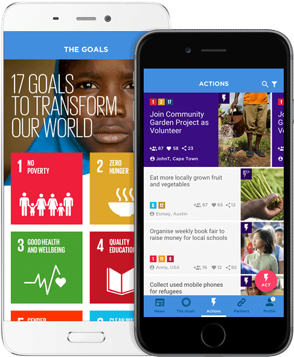
Even an application has been created for the dissemination of the 17 SDGs and for raising awareness regarding both the sustainable development and the contribution citizens can have to the whole topic.
The SDGs in Action app has been developed to highlight the Sustainable Development Goals - the world’s to-do list to end poverty, reduce inequalities and tackle climate change. It is brought to you by the GSMA, which represents the interests of nearly 800 mobile operators worldwide, and Project Everyone, a non- profit global campaign to spread the messaging of the SDGs.
Knowledge could also be obtained from teachers’ experience, and especially those who have been involved with intercultural and multicultural learning. This may provide some insight into the abilities required for interculturally oriented education, as well as a rediscovering of what education is all about. Through his “Rediscovering Education Through Intercultural Dialogue”, Christoph Eberhard “approaches ‘education’ as part of a learning process and he will decline this process in ten points: trusting, daring, opening up, listening, wondering, rooting, answering, sharing, discovering, learning”. He actually refers to a set of fundamental learning abilities that appear to be particularly essential in the context of intercultural learning and are all interrelated. They are even connected in some ways to the most fundamental abilities required for learning how to learn.
Thus, it is even more important to raise awareness about the need for a diverse education and how to include cultural diversity into educational programs. Multilingualism should be encouraged via education and the recognition that languages are more than just instruments for communication; they are also vehicles for values and worldviews. In higher education and research, cultural diversity is also important. It is not only about instilling "intercultural ideals" in students to help them become better "global citizens." Last but not least, consideration of intercultural competencies and diversity standards for teachers should not be overlooked.


Co-funded by the Erasmus+ 2021 Framework Programme of the European Union