

Lesson 5: Intercultural Dialogue for a more Sustainable future: can ICD be a basis for the accomplishment of SDGs?
Lesson 5: Intercultural Dialogue for a more Sustainable future: can ICD be a basis for the accomplishment of SDGs?
SDG 4
Quality Education can be achieved through pedagogic methods that include dialogue-based activities. Students' awareness of global education, citizenship, and possible attitudes toward global responsibility can all be enhanced through activities. The students take part in carefully prepared interactive activities and cross-cultural exchanges, on an international level if possible, and they reflect on their experiences.
Despite its challenges, intercultural dialogue might help to develop sustainable development planning through education by engaging not only students and teachers, but also civic society. It can also help achieve the SDGs by focusing on officials who are directly responsible for local governments, among others. Furthermore, because sustainability includes cultural meanings and interpretations, it necessitates extensive cooperation on a local, national, regional, and worldwide scale.
Learning and using conversation skills, as well as essential topics like coping strategies, critical thinking, anti-discrimination, and localizing SDGs for target groups, should all be part of capacity building in education for sustainable development. The Sustainable Development Policy Institute (SDPI) and other institutes can help make this challenging job a reality in the implementation of sustainable development initiatives and plans at the organizational and local levels.
Cultural variety and intercultural conversation not only spur economic progress, but also help to improve social cohesiveness. As a result, cultural diversity has a favorable influence on tourism, innovation, and poverty reduction, paving the way for long-term prosperity. Promoting international communication and cultural diversity should be viewed as a human duty, and the international community should be concerned about it. UNESCO is particularly concerned with this responsibility since it seeks to encourage communication between cultures and civilizations by enhancing the range of cultural expressions in all their forms. The “2005 Convention on the Protection and Promotion of the Diversity of Cultural Expressions” was one of the many instruments set by UNESCO to help achieve the common goal of peace and understanding among nations.
In its concept of cultural pluralism, UNESCO's Universal Declaration on Cultural Diversity (2001) recognized diverse, overlapping, and dynamic cultural identities of individuals and communities. Cultural variety was described as a dynamic, renewable asset that "must not be viewed as an unchangeable inheritance but as a process ensuring humanity’s sustainable existence.
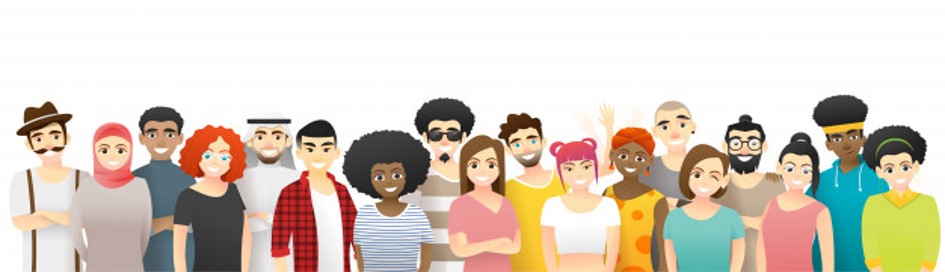
For a more sustainable future, we should always have in mind that intercultural dialogue must be based on the fundamental principles by the Council of Europe, as well as on the recognition of the equality of individual dignity and shared humanity. The common principles of democracy, human rights and fundamental freedoms, the rule of law, pluralism, tolerance, non-discrimination, and mutual respect are the pillars of a political culture that cherishes variety.
Check: The Importance Of Culture For Sustainability
To promote dialogue,
-
democratic governance of cultural diversity should be improved in many ways,
-
democratic citizenship and participation should be strengthened,
-
intercultural competences should be taught and learned,
-
intercultural dialogue spaces should be created and expanded, and
-
intercultural dialogue should be taken to an international level.


Co-funded by the Erasmus+ 2021 Framework Programme of the European Union